When temperatures rise during the summer, the upstairs rooms of a house can quickly become uncomfortable. Bedrooms can feel particularly warm by late afternoon and evening, which naturally leads homeowners to look for simple ways to let some of that trapped heat escape.
One idea you may have considered is opening the loft hatch. After all, warm air rises, so it seems logical that opening the hatch would allow hot air from upstairs to move into the loft and make the rooms below feel cooler.
In some circumstances, opening a loft hatch may temporarily increase air movement, but it is not generally an effective or reliable way to cool your home. In fact, on a sunny summer day your loft can become considerably warmer than the rooms underneath it, meaning opening the hatch may allow unwanted heat to move between the loft and your living space.
Understanding what is happening above your ceiling can help you find a much better solution.
Why Does the Upstairs of My House Get So Hot?
The upper floor of a house often feels warmer during hot weather because heat enters the building from several directions. Sunshine warms windows, walls and the roof throughout the day, while warm air generated inside the property naturally moves upwards.
The roof can receive direct sunlight for many hours. Heat absorbed by the roof covering can then pass into the roof space, which is one reason lofts can become extremely warm during sunny weather.
Your ceiling and loft insulation help form a barrier between this roof space and the rooms below. Insulation slows the movement of heat through the building fabric, which is useful in winter for retaining warmth and can also help reduce heat transfer from a hot loft towards the rooms underneath.
So, Will Opening the Loft Hatch Let Hot Air Escape?
Potentially, but only under the right conditions.
Opening the loft hatch creates a route between your upstairs living space and the loft. If the air in your home is warmer than the loft and there is somewhere for that loft air to escape, some warmer household air may travel upwards.
However, this does not mean your loft automatically becomes an effective ventilation system for your house.
For opening the hatch to provide meaningful cooling, you would need favourable differences in temperature and air pressure together with sufficient airflow through the loft itself. Simply opening the hatch does not guarantee any of these conditions.
More importantly, during warm sunny weather the situation may actually be reversed: the loft may be hotter than the house.
Opening the hatch then removes part of the separation between the two spaces, potentially allowing heat from the roof space to influence the temperature of the landing and bedrooms below.
Why Your Loft Can Be Hotter Than Your House
Think about what happens to a roof on a sunny day. Tiles, slates and other roofing materials are exposed directly to solar radiation for hours at a time. As the roof covering becomes warmer, some of that heat passes towards the loft beneath it.
Meanwhile, your living space benefits from ceilings, insulation and other parts of the building fabric separating it from the roof.
Opening the loft hatch creates a direct opening through that separation.
This is why opening the hatch because “heat rises” does not tell the whole story. Heat transfer depends on the temperatures on both sides of the opening and the movement of air through the building.
If your landing is warm but the loft is even warmer, opening the hatch is unlikely to provide the refreshing escape route you were hoping for.
Loft Ventilation Is Different From Ventilating Your Home
It is also important to distinguish between roof-space ventilation and ventilation within the rooms of your home.
Roof spaces are often designed with ventilation at the eaves or other locations. One of the important purposes of this ventilation is moisture control, helping reduce the risk of condensation developing within the roof structure. Building guidance recognises the importance of maintaining adequate ventilation within appropriate roof constructions.
That ventilation does not necessarily mean the loft is designed to function as an exhaust system for warm air from your bedrooms.
Your home’s ventilation should instead come from suitable windows, trickle vents, extractor fans and any purpose-designed ventilation system installed within the property.
When Might Opening the Loft Hatch Make a Difference?
There are situations where opening a loft hatch could make the landing feel different because you have changed the way air can move through the building.
For example, it might have an effect when:
- The Loft Is Cooler Than The Rooms Below
- Outdoor Temperatures Have Dropped Significantly
- The Roof Space Has Effective Ventilation
- Other Windows Are Open And Creating Air Movement
- There Is A Useful Temperature Difference Between The Two Spaces
Even in these circumstances, however, opening the loft hatch should not be viewed as the main way to control summer temperatures.
The effect can vary enormously depending on the design of the property, roof construction, insulation, ventilation, wind conditions and outside temperature.
Could Opening the Loft Hatch Actually Make the House Hotter?
Yes, it can.
Imagine your loft has spent the entire afternoon beneath a roof heated by strong sunshine. By early evening, you open the loft hatch because the bedrooms feel hot.
Instead of creating a convenient route for household heat to escape, you have now directly connected the landing to a roof space that may itself contain very warm air.
The result might be little noticeable difference, or you could allow additional heat to move between the two spaces.
This is why leaving the loft hatch open throughout a hot summer day is generally not a good substitute for controlling solar gain and properly ventilating the occupied areas of your house.
Should I Leave My Loft Hatch Open Overnight?
Night-time conditions can be very different because the outside temperature often drops after sunset and the roof begins losing the heat it accumulated during the day.
However, opening windows strategically is usually a much more direct method of bringing cooler outside air through your home than opening a loft hatch.
For example, opening windows on different sides of the property can encourage air to move through the rooms. Where it can be done safely and securely, allowing cooler night air into bedrooms can help remove some of the heat stored within the building.
The loft hatch itself does not provide access to cool outside air in the same way that a window does. It simply provides access to another internal space.
Does Loft Insulation Help Keep a House Cooler?
Loft insulation is commonly associated with winter because one of its main benefits is reducing heat loss through the roof. An uninsulated home can lose a significant proportion of its heat through the roof, which is why adequate loft insulation can substantially improve energy efficiency.
However, insulation works by slowing heat transfer rather than generating heat itself. That barrier can therefore also be valuable when the loft becomes hot during summer.
The better separated the occupied rooms are from a hot roof space, the slower unwanted heat can transfer through the ceiling.
At Yorkshire Loft Ladders, we can install new loft insulation or assess existing insulation when improving a loft. When loft boarding is being installed, it is particularly important that the existing insulation is considered rather than simply compressing or removing it.
Your Loft Hatch Is Part of the Thermal Barrier
The loft hatch itself can sometimes be overlooked when homeowners think about insulation.
You could have a well-insulated loft but still have an old, thin or poorly fitting hatch creating an area where air and heat can move more easily between the house and roof space.
Energy Saving Trust specifically recommends checking for draughts around loft hatches and using draught-proofing strips where appropriate.
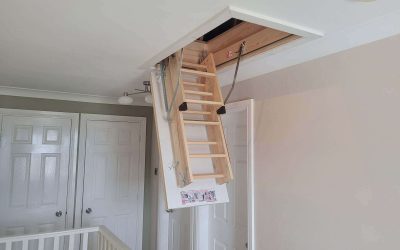
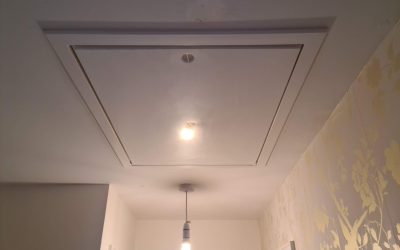
Modern loft hatches can provide a much neater and more energy-efficient separation between the loft and the rest of your property than some older plywood, MDF or push-up hatches. Yorkshire Loft Ladders can also enlarge or relocate existing loft openings where the current access is unsuitable.
Better Ways to Keep Upstairs Rooms Cooler
If your bedrooms become extremely warm during summer, it is usually better to tackle the causes of overheating rather than relying on the loft hatch.
Useful measures can include:
- Keep Curtains Or Blinds Closed During Strong Sunshine – Preventing solar energy entering through windows can make a noticeable difference, particularly with south- and west-facing rooms.
- Ventilate When The Outdoor Air Is Cooler – Opening windows during cooler mornings, evenings and overnight periods can help replace warmer indoor air.
- Avoid Opening Windows When It Is Hotter Outside – During the hottest part of the day, opening every window can sometimes introduce more warm air.
- Create Cross-Ventilation – Opening suitable windows on different sides of the house can encourage air to travel through rather than remaining trapped in individual rooms.
- Use Fans Effectively – Fans do not lower the actual air temperature, but the increased air movement can help people feel cooler.
- Check Your Loft Insulation – Inadequate or badly installed insulation can reduce the thermal separation between the roof space and rooms below.
- Check The Loft Hatch – An old, uninsulated or poorly fitting hatch may allow unwanted air leakage.
- Check Roof-Space Ventilation – The loft itself should have appropriate ventilation for its roof construction, particularly to manage moisture and condensation.
The most effective solution is often a combination of these measures rather than relying on one quick fix.
What About Opening the Loft Hatch With a Fan?
Another idea sometimes suggested is positioning a fan so that it pushes warm air towards or through an open loft hatch.
Again, whether this works depends heavily on the individual property.
Moving air into the loft does not necessarily remove that air from the building. Unless there is a suitable route for it to leave the roof space, you may simply be moving air from one part of the property into another.
It also means deliberately bypassing the insulated and draught-controlled boundary between the house and loft.
A fan positioned to encourage cooler outdoor air through appropriate windows will generally have a much clearer ventilation route than trying to use the loft as part of the system.
What If My Loft Is Extremely Hot?
A hot loft during sunny weather does not automatically indicate that something is wrong. Roof spaces naturally experience considerable temperature changes throughout the year.
However, if you are concerned about excessive heat, poor ventilation, condensation, dampness or the condition of your existing insulation, it is worth having the loft inspected rather than trying to solve the issue by permanently leaving the hatch open.
Ventilation within a roof space is particularly important when it comes to moisture. Warm, moisture-containing household air reaching colder parts of a roof can contribute to condensation under the right conditions, which is another reason the relationship between loft insulation, air movement and roof ventilation needs to be considered properly.
Loft Boarding Should Not Compromise Your Insulation
If you are thinking about making better use of your loft for storage, insulation should also be part of the conversation.
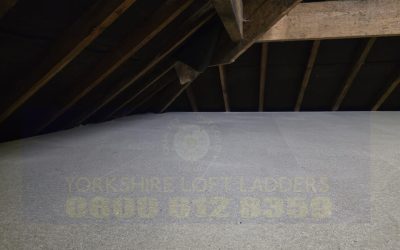
Putting boarding directly over insulation can compress it and interfere with the way the insulation is intended to perform.
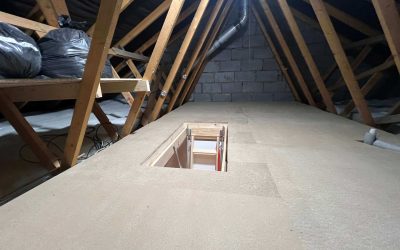
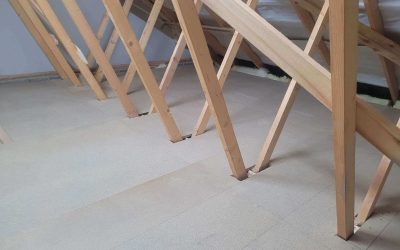
At Yorkshire Loft Ladders, our loft boarding and insulation solutions are designed around the individual loft. Our boarding is raised above the existing insulation rather than simply removing it to create the storage area.
This allows homeowners to gain useful storage space while taking the existing insulation into consideration.
Don’t Rely on the Loft Hatch to Cool Your Home
So, will opening your loft hatch cool your house?
Possibly for a short period under certain conditions, but it is not something you should rely on as a cooling method.
During hot weather, your loft may actually be warmer than the rooms beneath it. Opening the hatch then creates an opening between your living space and that hot roof space rather than providing a direct route outdoors.
A better approach is to reduce the amount of heat entering the house in the first place, ventilate rooms when outdoor temperatures are favourable, and make sure the barrier between your living areas and loft is performing effectively.
Your loft insulation, loft hatch and roof-space ventilation all have roles to play, but they need to work together rather than using the loft hatch as a makeshift ventilation system.
If you are unsure about the condition of your loft insulation or would like to improve your loft access, Yorkshire Loft Ladders can assess your existing space and recommend a suitable solution. We install loft insulation, loft boarding, loft hatches and loft ladders throughout Yorkshire.
Loft Ladders Hampsthwaite – Loft Ladders Menston – Loft Ladders Farnham